



How Do Water Heaters with Heat Pumps Work?
Heat pumps are modern devices that use ambient heat to warm water. Their operation can be broken down into three key stages:
- Heat extraction: Thermal energy is drawn from air, ground, or water.
- Temperature amplification: A compressor raises the temperature of the extracted heat to a suitable level for water heating.
- Energy transfer: The heat is transferred to water stored in a tank, ready for everyday use.
Heat pump efficiency, measured by the COP (Coefficient of Performance), enables 3–5 units of heat generation from just one unit of electricity.
Types of Heat Pumps for Water Heating
Air-to-Water Heat Pumps
- Source heat from outdoor or indoor air.
- Easy to install and widely applicable.
Ground-to-Water Heat Pumps
- Utilize the stable temperature of the ground.
- Higher efficiency but require space for collectors and larger upfront investment.
Water-to-Water Heat Pumps
- Extract heat from groundwater or bodies of water.
- Less common due to specific installation requirements.
-
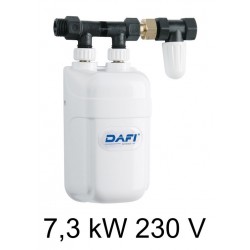
Dafi water heater 7,3 kW 230 V - under...
Small single-phase Dafi Water Heater 7.3 kW 230 V with pipe connector ½ ". Dafi water heater suitable for shower and sink / shower together. Unlike other water heaters, installing the DAFI water heater at any angle does not adversely impact its performance, and it does not damage the heating element.
94,99 €In Stock -
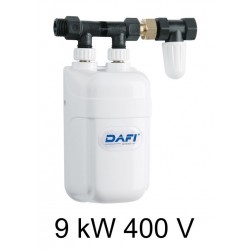
Dafi water heater 9 kW 400 V - under sink...
Small biphase Dafi Water Heater 9 kW 400 V with pipe connector ½ ".Dafi water heater suitable for bath and sink / tub combinations. Unlike other water heaters, installing the DAFI water heater at any angle does not adversely impact its performance, and it does not damage the heating element.
104,99 €In Stock -
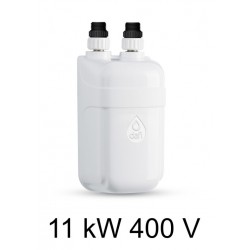
Water heater DAFI 11 kW 400 V (biphase)...
Water heater DAFI 11 kW 400 V (biphase) without monobloc (heating system only)Dafi water heater suitable for bath and sink / tub combinations. Unlike other water heaters, installing the DAFI water heater at any angle does not adversely impact its performance, and it does not damage the heating element.
104,99 €In Stock
Benefits of Heat Pumps for Water Heating
- Exceptional energy efficiency: Reduced energy consumption compared to traditional heaters.
- Eco-friendliness: Utilizing renewable energy sources minimizes CO₂ emissions.
- Versatile applications: Suitable for homes, hotels, and industrial facilities.
- Low maintenance needs: Automatic operation with a long lifespan of 20–25 years.
- Effective in cold climates: Modern models maintain performance even in low temperatures.
Drawbacks and Challenges
- High initial costs: Purchasing and installing a heat pump require more significant investment.
- Space requirements: Room for a hot water tank and, for ground systems, space for collectors.
- Dependence on ambient conditions: Air-source pumps may be less efficient in extreme cold.
- Maintenance expenses: Regular servicing may cost more than simpler systems.
Who Benefits Most from Heat Pumps?
- Single-family homes: Ideal for reducing energy bills.
- Commercial properties: Hotels, guesthouses, and industrial facilities.
- Environmentally conscious individuals: Perfect for those focusing on renewable energy sources.
-
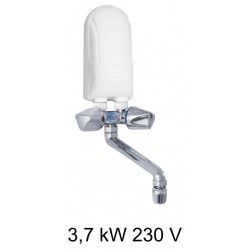
Water heater DAFI 3.7 kW 230 V (single...
Small single-phase Dafi Water Heater 3.7 kW 230 V with chromium-colored plastic monobloc. Suitable for small sinks and washing hands. Water heater can be installed only with the supplied battery and spout.
84,99 €In Stock
Key Factors When Choosing a Heat Pump
- Device capacity: Match it to your hot water demand.
- Tank size: Ensure it meets the needs of the users.
- COP efficiency: Higher values indicate better performance.
- Operating temperature range: Essential for colder climates.
- Manufacturer reputation and service: Choose equipment with good warranties and accessible support.
Summary
Heat pumps are an eco-friendly and cost-effective alternative to traditional water heaters. Their high efficiency and durability make them an excellent solution for homes and businesses. While initial costs are higher, the long-term benefits outweigh the upfront expenses.